
BAU Survey Team initiates tracking unique domestic animals and poultry germplasm in Ranchi districts
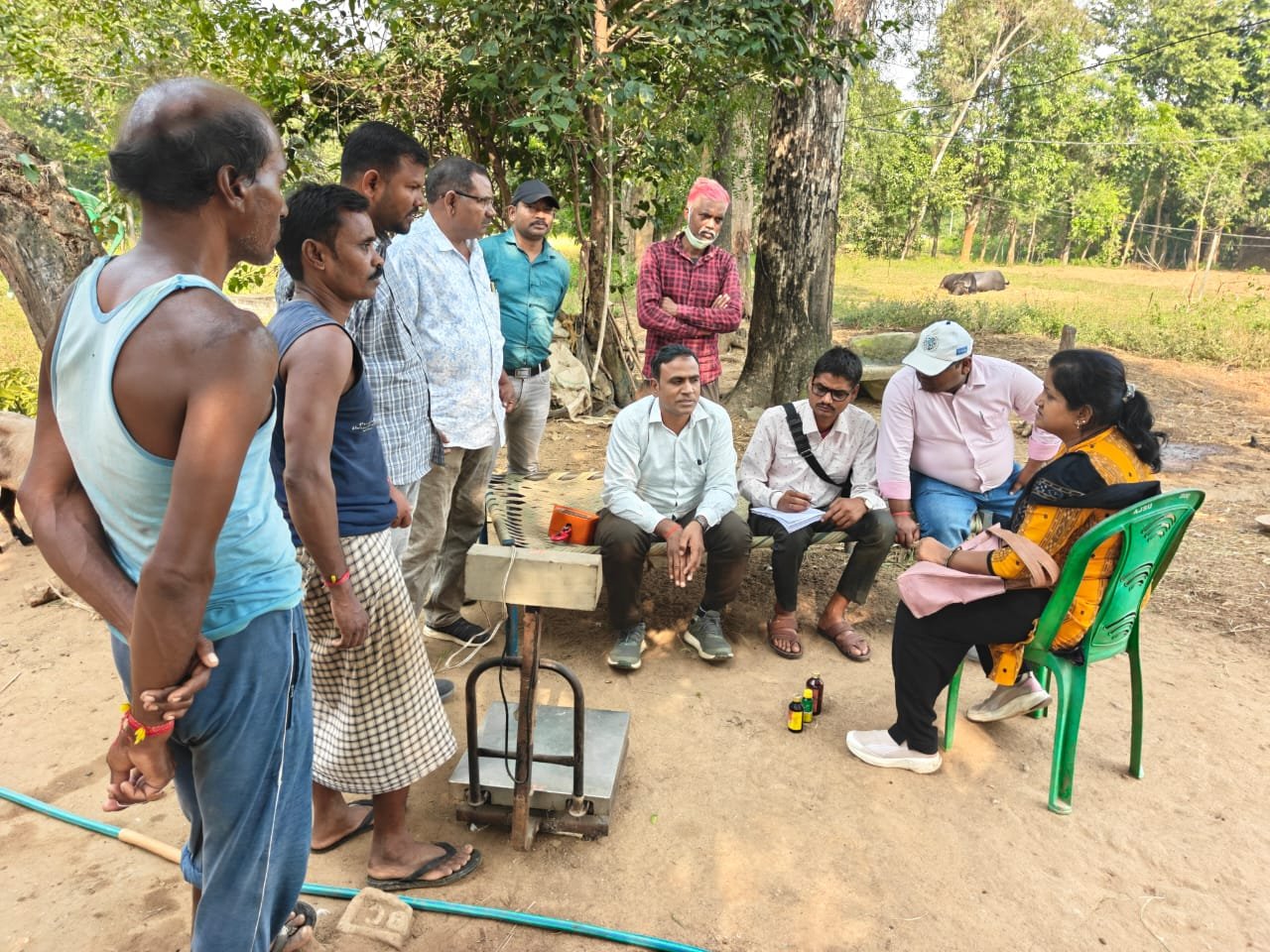
RANCHI: Advancing the critical work of its dedicated animal genetic research center started in 2024, the Team from Birsa Agricultural University (BAU) on Saturday (October 24) conducted an intensive population survey targeting unique, unmapped local non descript domestic animals and poultry populations across the villages of Serenghatu in Sonahatu block and Gowali and Barwadih in the Rahe block of Ranchi district. “Walking across the river, and tough hilly terrains including the elephant dominated forest on Marangburu hills made our determination even stronger” said the PI of the Project Dr Nandani Kumari. This follows the team’s successful baseline mapping drives completed earlier across the neighbouring Rahe and Bundu blocks. Operating as an official nodal center for the ICAR-funded national flagship initiative under the Network Project on Animal Genetic Resources (NP-AnGR) of the ICAR-National Bureau of Animal Genetic Resources (NBAGR), Karnal—the BAU team is spearheading a scientific crusade to systematically document the state’s unmapped domestic germplasm.
Speaking on the absolute necessity of the field tracking, the Principal Investigator (PI) of the project, Dr Nandani Kumari, emphasized, “Official breed registration is the baseline foundation essential for the scientific conservation of our native breeds. Co-PIs, Dr Narendra Pratap Singh and Dr Shailendra Kr Rajak added that without formal recognition, we cannot effectively protect and maintain the rich genetic biodiversity that gives Jharkhand’s indigenous livestock their natural resilience.”
The survey requires exhaustive fieldwork to meet the stringent national criteria.
The scientific team meticulously recorded granular house-by-house data from local tribal and rural farmers across these villages. Balancing scientific research with community outreach in villages like Gowali, Gonda and Dokad of Rahe block during earlier surveys, the team came to know about the ethno veterinary practices, followed by farmers.
The BAU team also distributed high-quality mineral mixtures to the livestock owners to boost the health and productivity of the local animals.
Backed by ICAR funding, BAU’s overarching vision through this network project is highly ambitious: to transform the entirety of Jharkhand into a “Zero Non-Descript Zone.” The institution is targeting the genetic characterization and formal registration of all unmapped domestic livestock species, extending the rigorous scientific mapping beyond conventional farm animals to include the region’s indigenous canine population as well.
The BAU research team will record the data of the same population in another two districts also for the breeds to be put up for registration.
RANCHI: Advancing the critical work of its dedicated animal genetic research center started in 2024, the Team from Birsa Agricultural University (BAU) on Saturday (October 24) conducted an intensive population survey targeting unique, unmapped local non descript domestic animals and poultry populations across the villages of Serenghatu in Sonahatu block and Gowali and Barwadih in the Rahe block of Ranchi district. “Walking across the river, and tough hilly terrains including the elephant dominated forest on Marangburu hills made our determination even stronger” said the PI of the Project Dr Nandani Kumari.
This follows the team’s successful baseline mapping drives completed earlier across the neighbouring Rahe and Bundu blocks. Operating as an official nodal center for the ICAR-funded national flagship initiative under the Network Project on Animal Genetic Resources (NP-AnGR) of the ICAR-National Bureau of Animal Genetic Resources (NBAGR), Karnal—the BAU team is spearheading a scientific crusade to systematically document the state’s unmapped domestic germplasm.
Speaking on the absolute necessity of the field tracking, the Principal Investigator (PI) of the project, Dr Nandani Kumari, emphasized, “Official breed registration is the baseline foundation essential for the scientific conservation of our native breeds. Co-PIs, Dr Narendra Pratap Singh and Dr Shailendra Kr Rajak added that without formal recognition, we cannot effectively protect and maintain the rich genetic biodiversity that gives Jharkhand’s indigenous livestock their natural resilience.”
The survey requires exhaustive fieldwork to meet the stringent national criteria.
The scientific team meticulously recorded granular house-by-house data from local tribal and rural farmers across these villages. Balancing scientific research with community outreach in villages like Gowali, Gonda and Dokad of Rahe block during earlier surveys, the team came to know about the ethno veterinary practices, followed by farmers. The BAU team also distributed high-quality mineral mixtures to the livestock owners to boost the health and productivity of the local animals.
Backed by ICAR funding, BAU’s overarching vision through this network project is highly ambitious: to transform the entirety of Jharkhand into a “Zero Non-Descript Zone.” The institution is targeting the genetic characterization and formal registration of all unmapped domestic livestock species, extending the rigorous scientific mapping beyond conventional farm animals to include the region’s indigenous canine population as well.
The BAU research team will record the data of the same population in another two districts also for the breeds to be put up for registration.
