
BAU celebrates National Goat Day at Barabanki, East Singhbhum, 517 Goats Vaccinated
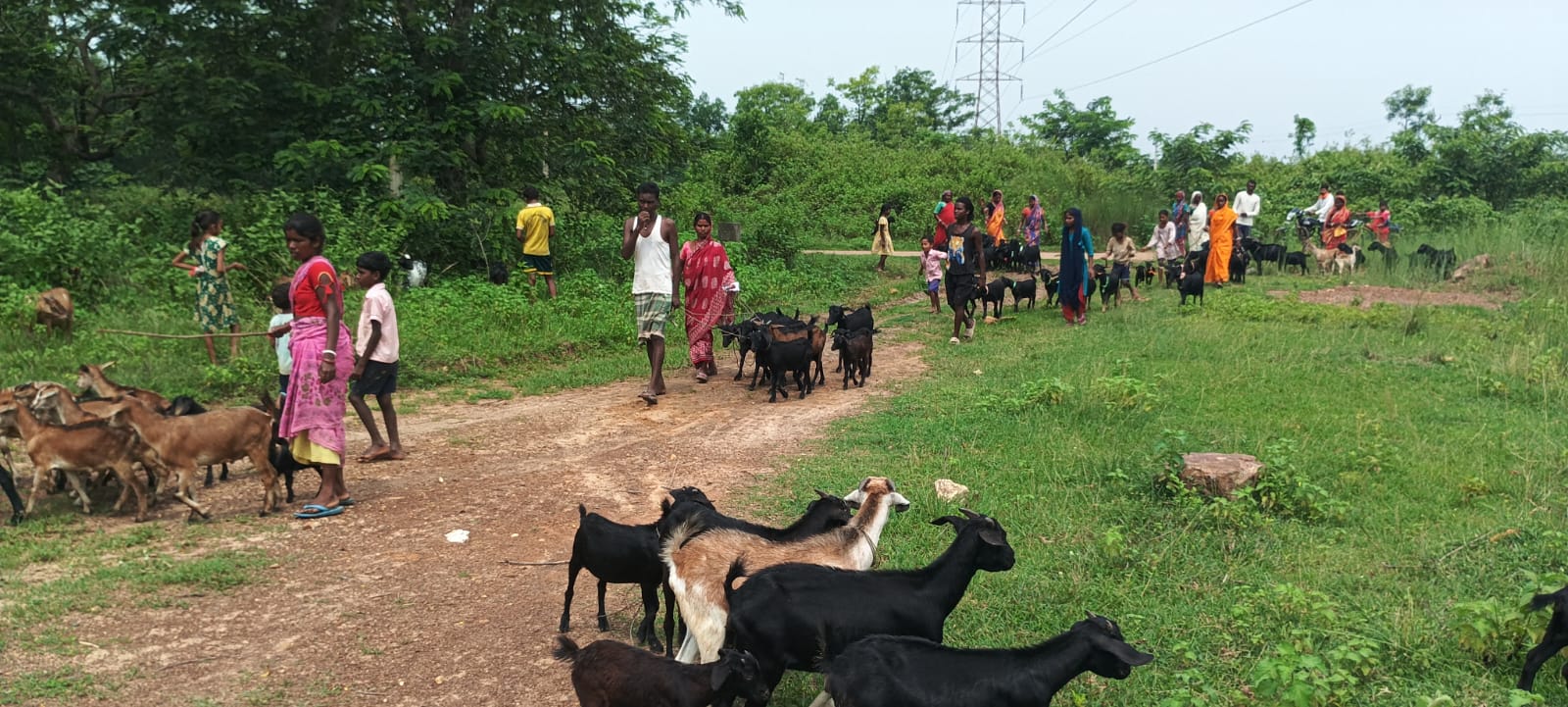
Ranchi: National Goat Day was celebrated with great enthusiasm under the All India Coordinated Research Project (AICRP) on Goat being operated by Birsa Agricultural University (BAU) in Barabanki village of East Singhbhum. The programme highlighted the importance of scientific goat farming practices, particularly vaccination, to enhance productivity and improve farmers’ livelihoods.
Addressing the gathering of goat farmers, the Dean, College of Veterinary Science & Animal Husbandry Dr Alok Kumar Pandey said that goat rearing plays a vital role in women empowerment and that adopting scientific management practices, especially timely vaccination, is essential to make goat farming a profitable and sustainable enterprise.
He said Jharkhand ranks 7th with 9.12 million goat which accounts for 6.1% of total Indian goat population. Goat population has also registered a significant increase in Jharkhand (38.6%) during recent years, he added.
Principal Investigator of the project, Dr Nandani Kumari educated farmers on scientific management practices and highlighted the immense potential of Black Bengal goat rearing in Jharkhand. She expressed gratitude to the ICAR for funding the project. She invited farmers to participate in the university’s training programmes on scientific goat rearing and Integrated Farming Systems.
Co-Principal Investigator Dr Shailendra Kumar Rajak sensitized farmers about major goat diseases and preventive healthcare measures, emphasizing the importance of timely vaccination and disease management.
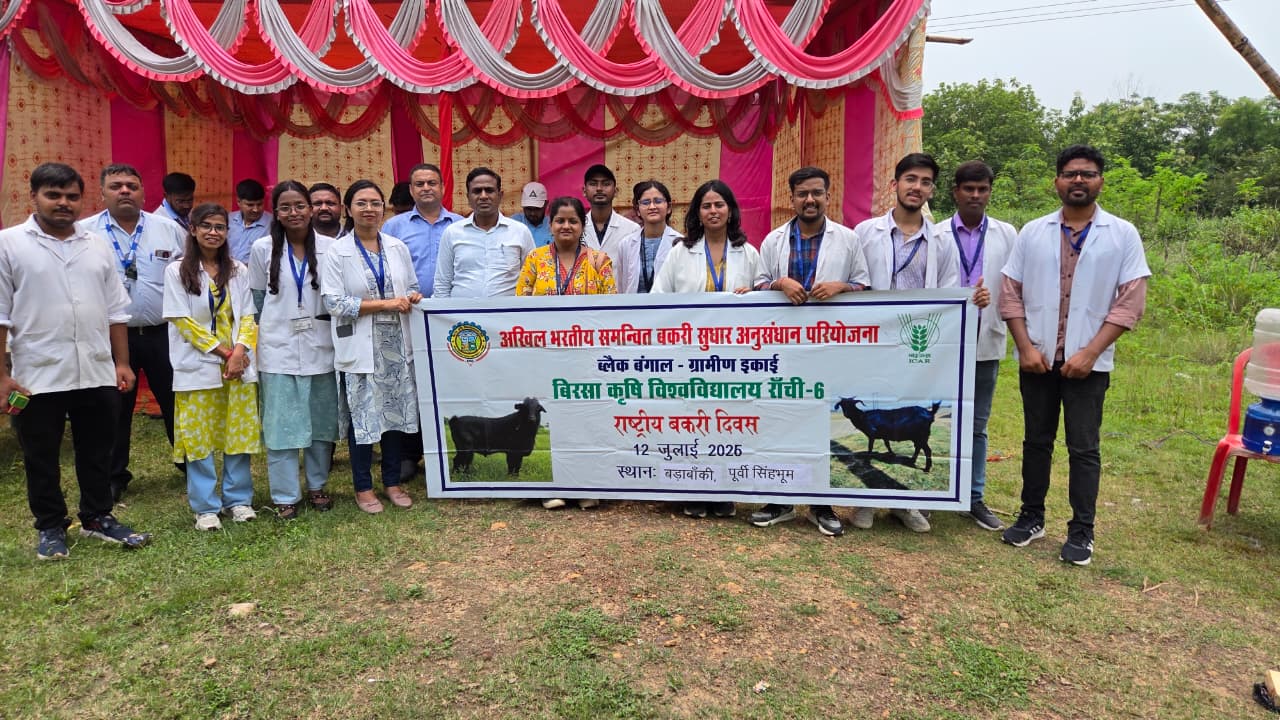
On the occasion, three progressive farmers— Jabarani Mahto, Surmila Singh, and Binod Singh were felicitated for their achievements in Black Bengal goat farming. Sharing their experiences, they credited the AICRP team for their success, stating that they had started with very few animals and had now expanded their flocks to around 30 goats through continuous technical support, timely vaccination, deworming, dipping, medicine distribution, and telephonic veterinary consultation.
The programme also witnessed active participation from twelve internship students working under IFSR and IBF.
Representatives from pharma companies – Virbac, Nutrivet, and Zydus contributed to the programme by distributing free veterinary medicines, including growth promoters, mineral mixtures, anthelmintics, vitamin supplements, liver extracts, herbal gut health promoters, antibiotics, and other essential healthcare products.
During the programme, 517 goats were vaccinated against enterotoxaemea while 49 farmers were benefited by medicine distribution.
The visiting team included Dr Pankaj Kumar and Dr Madhurendra Bachan.
