
Beyond Religious Identity: Roots, Cultural Memory and Shared Heritage in India
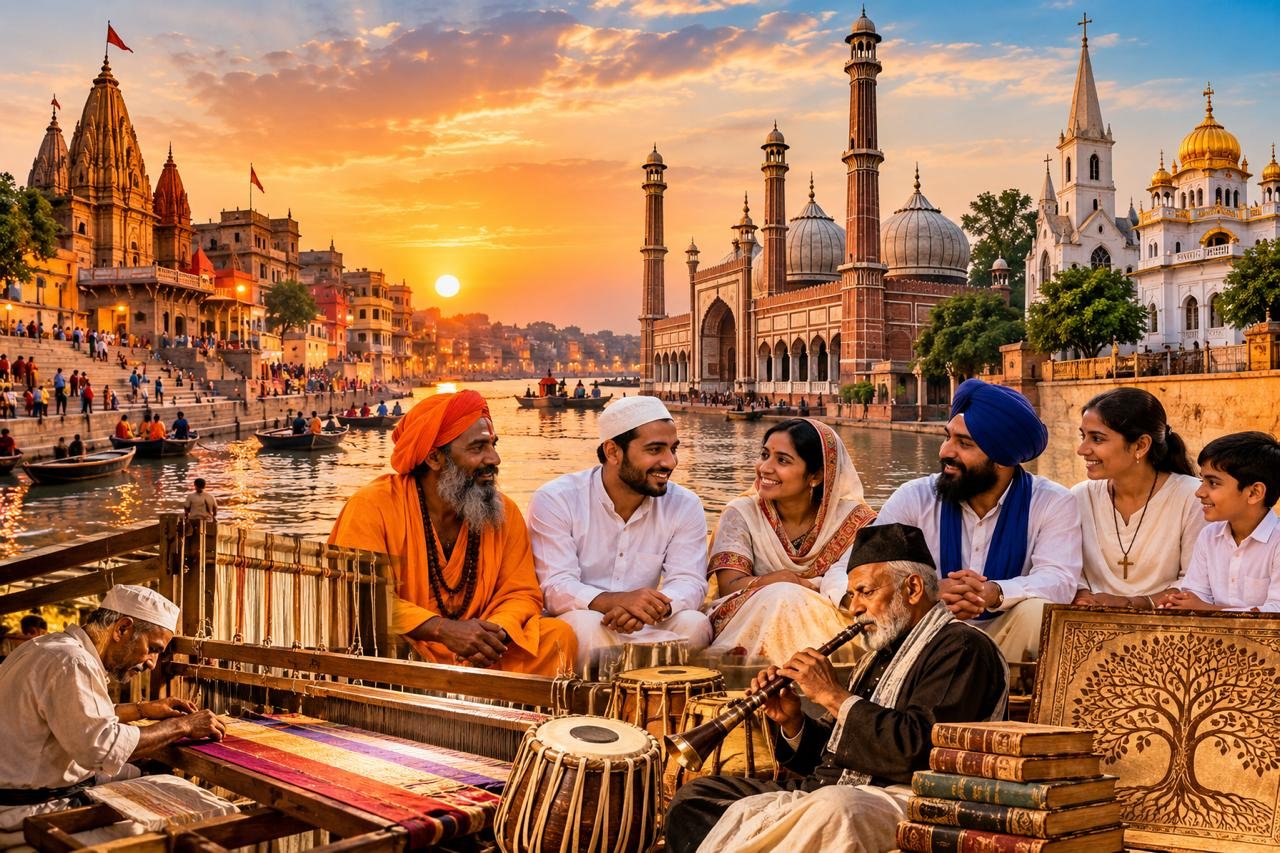
India’s identity cannot be understood only through its present political boundaries, religious communities, or modern institutions. It is the product of a long and complex civilisational process shaped by migration, religious change, social transformation, cultural interaction, and the continuity of local traditions. Across centuries, Hindu, Muslim, Sikh, Christian, Buddhist, Jain, and other communities have interacted, producing a shared cultural landscape expressed through language, music, literature, architecture, food, customs, and everyday social practices.
Genealogy and historical memory provide important ways to understand this complexity. In South Asia, religious identity and ancestry have not always been identical. Even when religious identities changed, families could retain regional, occupational, linguistic, and social memories over generations. The historical connections among Punjab, Sindh, Bengal, North India, and other regions demonstrate that political boundaries and religious identities developed within much older social and cultural contexts. However, claims about ancestry should be examined through family traditions, genealogical records, local histories, and archival evidence rather than treated as universal assumptions.
Reconnecting with one’s roots should also be understood in a broader cultural sense. It does not necessarily mean religious conversion or reconversion. Learning about one’s language, folklore, regional history, literature, music, family traditions, and ancestral memories can itself constitute a meaningful connection with heritage. Cultural belonging can coexist with present religious faith. Thus, an Indian Muslim may value the cultural traditions of his or her region, while an Indian Hindu may equally recognise Persian, Arabic, or Sufi influences as part of India’s shared cultural heritage.
Religious conversion in the Indian subcontinent was historically complex and cannot be explained through a single factor. Political circumstances, social mobility, trade, agricultural expansion, local power structures, marriage, Sufi traditions, economic opportunities, and individual religious choices could influence religious change in different regions. The experience of Bengal, for example, demonstrates that the expansion of Islam involved social, economic, agrarian, and cultural processes alongside political developments. Conversion also did not necessarily erase earlier social identities; caste, biradari, occupation, language, and regional affiliations could continue to shape social life.
The Shuddhi movement of the nineteenth and twentieth centuries brought questions of religious identity and social reintegration into public debate. Associated with reformist currents such as those of Swami Dayanand Saraswati and the Arya Samaj, and later with organised activities associated with Swami Shraddhanand, Shuddhi raised an important social question: whether individuals returning to an earlier religious tradition would be accepted by society. Religious acceptance and social acceptance were not always identical, making Shuddhi part of a wider debate about community, caste, reform, and social integration.
Ultimately, India’s cultural identity is too diverse to be reduced to a single religious category. Recognising historical roots does not require denying present identity. A mature understanding of Indian society requires respect for religious freedom, historical evidence, cultural diversity, and the shared memories that have developed through centuries of interaction. The study of roots should therefore become a means of understanding India’s plural heritage rather than creating divisions between communities.
