
6th Day of Sanskrit Week at DSPMU: Posters serving pictorial representation shloka painted
Ranchi: On the sixth day of Sanskrit Week, a vibrant poster competition unfolded within the esteemed halls of Dr. Shyama Prasad Mukherjee University’s Sanskrit Department. This event, held on a Wednesday, was not just an academic exercise but a thoughtful endeavor aimed at kindling a deeper appreciation for the Sanskrit language and its profound cultural heritage among the students.
The competition served as a fertile ground for nurturing creativity while fostering a sense of reverence for the timeless wisdom embedded within Sanskrit literature.
A significant number of students threw their hats into the ring, with participants including the likes of Shubham Kesari, Prerna, Megharani, Dolly Kumari, Aanchal Kumari, Anamika Bharti, Prerna Bharti, Garima Kumari, Meera Kumari, Riya Kumari, Uday Karmakar, Shobha Munda, and Monika Toppo. The enthusiastic turnout was a testament to the event’s success in capturing the students’ imagination and eagerness to explore the rich tapestry of Sanskrit culture.
The competition’s framework was both challenging and stimulating. Students were tasked with selecting one of the pre-assigned Sanskrit shlokas—verses rich with meaning and historical significance—and translating its essence into a visual masterpiece. This creative endeavor required the participants to go beyond mere recitation and delve into the art of storytelling through imagery. It was an opportunity for them to “paint a thousand words” and breathe life into the ancient verses with their artistic flair.
Each poster was to serve as a pictorial representation of the chosen shloka, making it a labor of love that demanded both intellectual engagement and artistic creativity. The students rose to the occasion with gusto, producing works that were not only visually striking but also intellectually profound, echoing the depth of the Sanskrit verses they represented.
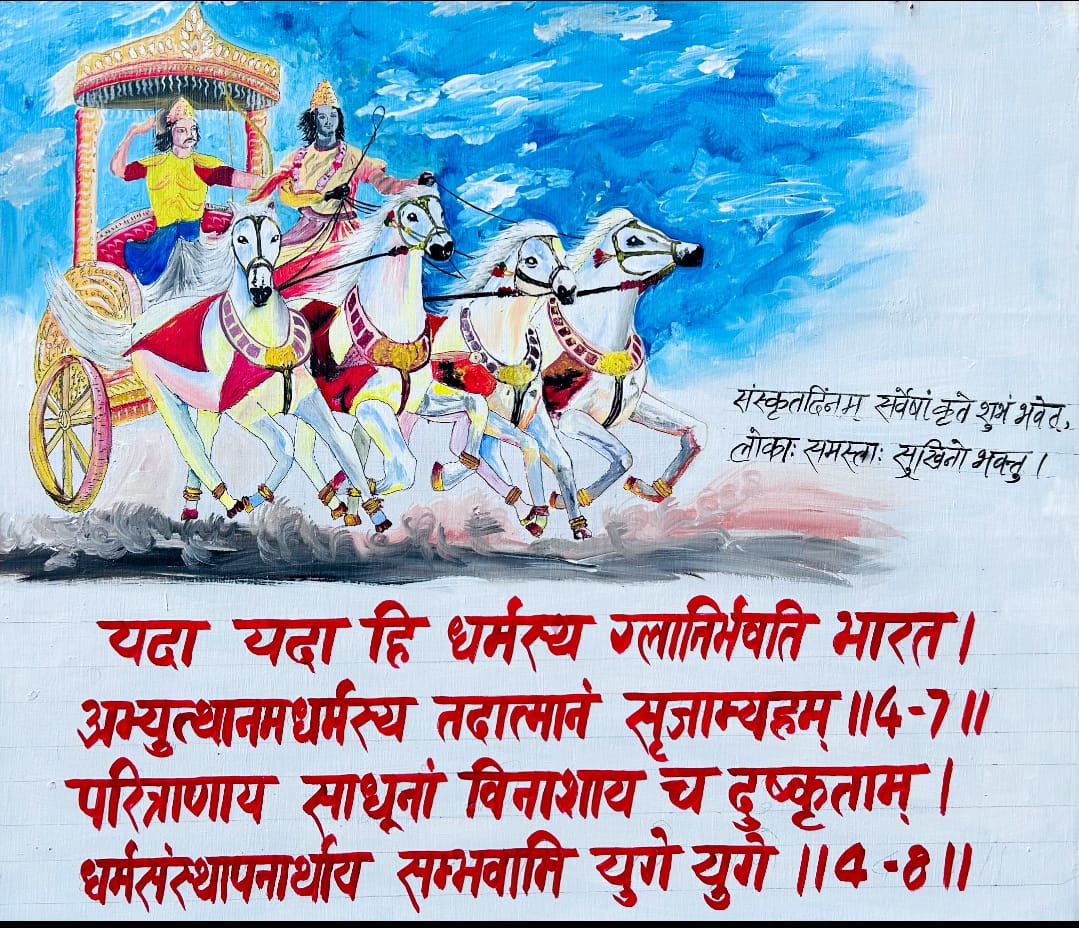
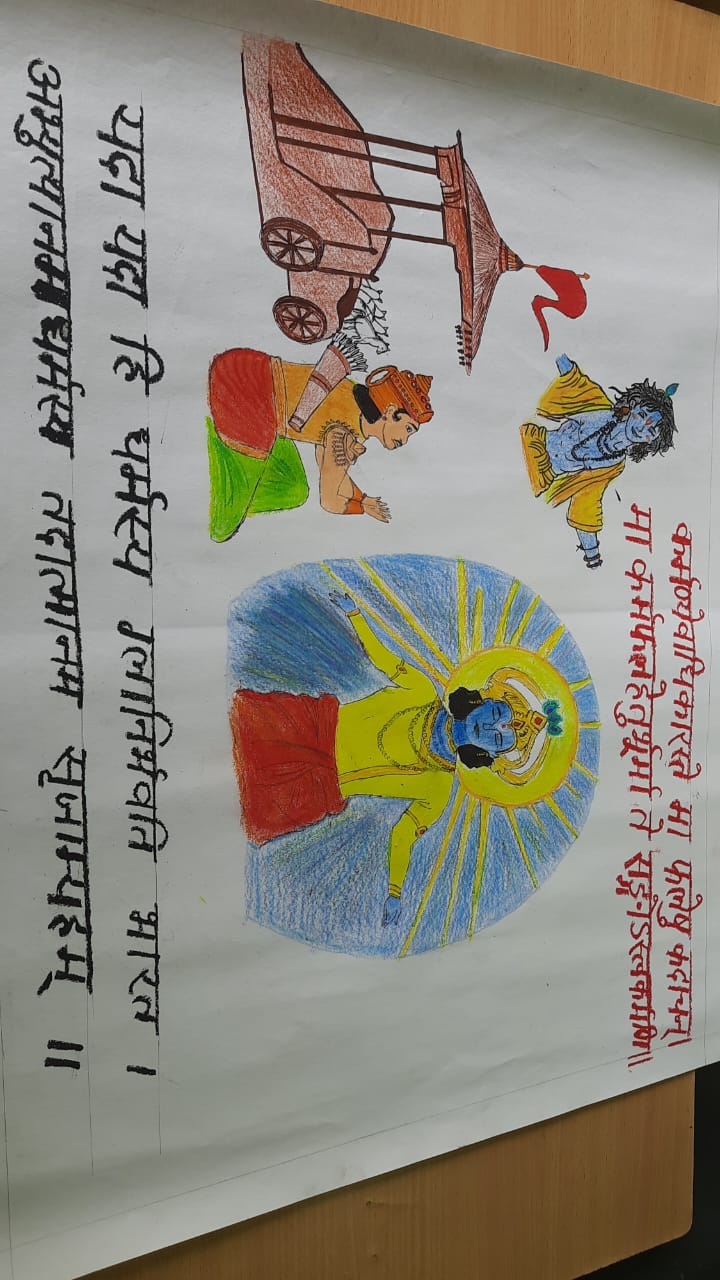
One student, for instance, chose the verse “Yada Yada Hi Dharmasya…” and crafted a compelling poster that vividly depicted the avatars of Lord Krishna and his divine mission to restore dharma, or righteous order, in the world. The poster was a feast for the eyes, capturing the essence of the eternal struggle between good and evil, and the divine intervention that tips the scales in favor of righteousness.
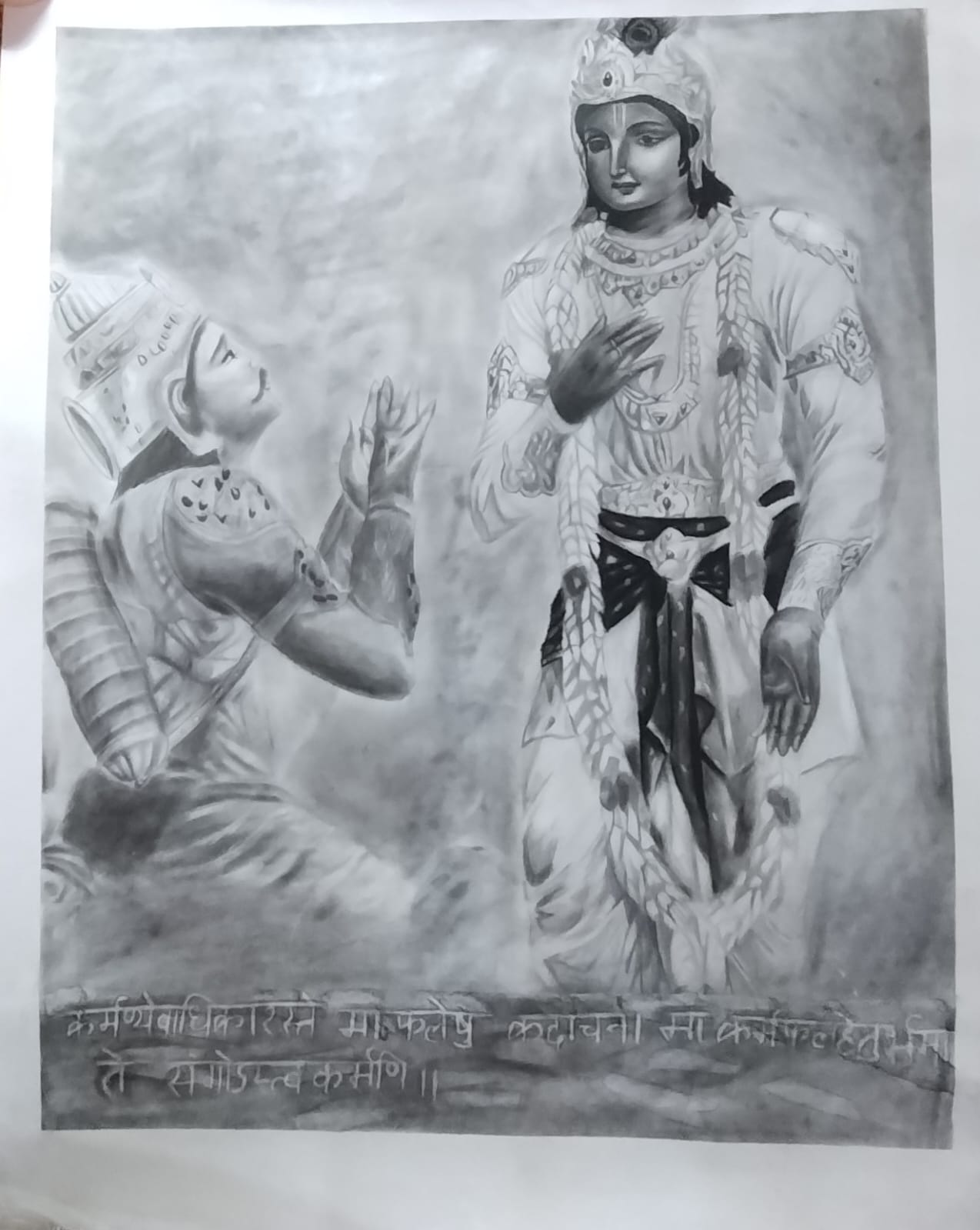
Another participant zeroed in on the verse “Karmanye Vadhikaraste…” and used the canvas to explore the profound philosophy of karma—the idea that one’s duty is to perform their actions without attachment to the results. The poster elegantly illustrated this concept, weaving a narrative that underscored the importance of focusing on one’s duties rather than the fruits they may yield, a lesson as relevant today as it was in ancient times.
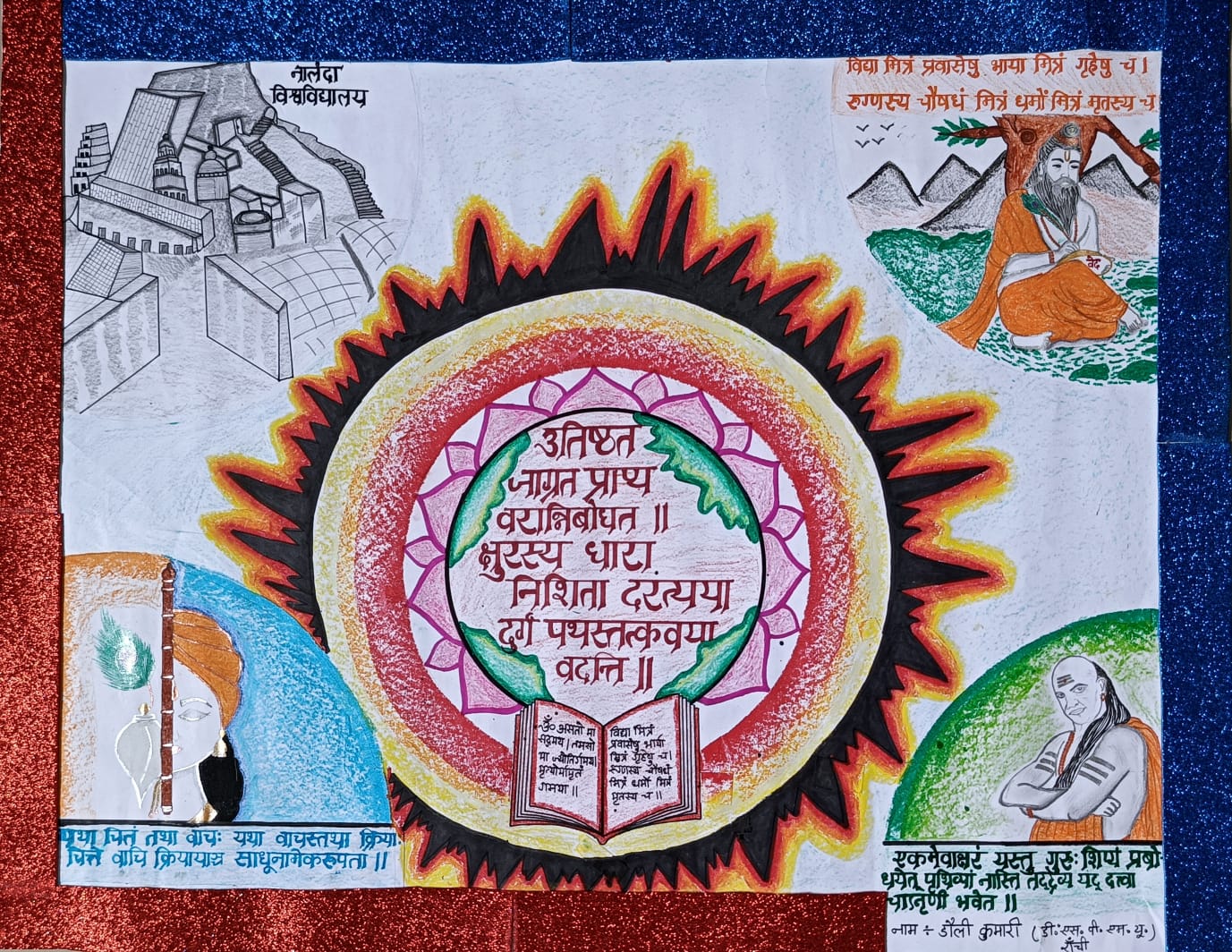
In a different vein, a student chose to illustrate the verse “Uttishthata Jagrata…”, drawing inspiration from the teachings of Swami Vivekananda. The poster reflected the urgency and vitality of his message, urging viewers to “Arise, awake, and stop not till the goal is reached.” It was a clarion call for self-awareness and active engagement in the pursuit of one’s life goals, encapsulating the spirit of Vivekananda’s teachings in a visually arresting manner.
Another poster, based on the verse “Tulsikananam Chaiva Gruhe…”, shone a spotlight on the sacred Tulsi plant, revered in Indian culture for its religious and spiritual significance. The student’s artwork highlighted the Tulsi’s place in Hindu households as a symbol of purity and devotion, while also touching on its medicinal and environmental benefits.
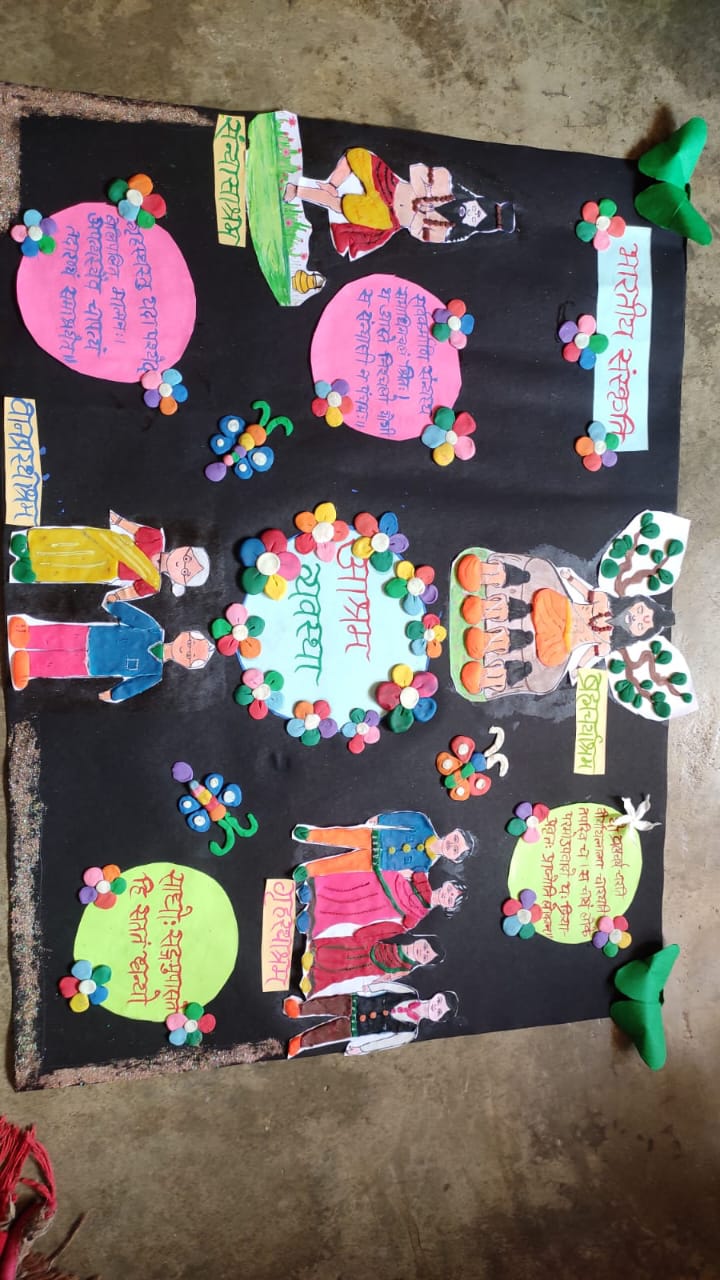
In a different corner of the room, a student chose to explore the concept of the ashrama system—Brahmacharya, Grihastha, Vanaprastha, and Sannyasa. Their poster depicted these four stages of life as a journey of spiritual evolution, emphasizing the importance of each phase in the quest for self-realization and fulfillment.
Dr. Dhananjay Vasudeo Dwivedi, the head of the Sanskrit Department, lauded the event as a “breath of fresh air” in academic circles, remarking that the fusion of art and ancient wisdom provided a novel and impactful way of engaging with Sanskrit literature. He observed that the competition had not only served as a creative outlet but had also deepened the students’ connection to their cultural roots, inspiring a newfound respect and enthusiasm for the Sanskrit language.
The event was orchestrated under the meticulous guidance of Dr. Rahul Kumar and Dr. Jagdamba Prasad, whose efforts ensured its smooth execution. Names of winners will be announced on Thursday.
