
IIT (ISM) Centre of Excellence empowers over 3,000 tribal students through digital education
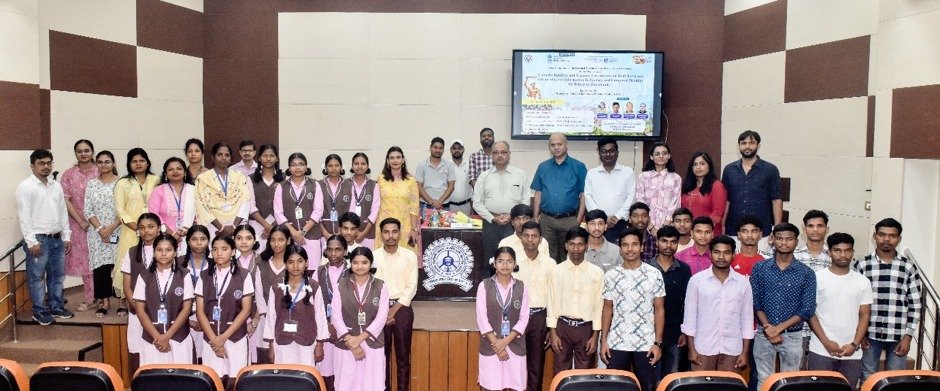
Dhanbad, November 3: As the country observes Janjatiya Gaurav Diwas Pakhwada from November 1 to 15, celebrating tribal heritage, history, indigenous knowledge, freedom fighters and community achievements in the run-up to the birth anniversary of Bhagwan Birsa Munda, IIT (ISM) Dhanbad is relently contributing to tribal empowerment through digital education and technological skill development. Its Centre of Excellence (CoE), supported by the Ministry of Tribal Affairs (MoTA), Government of India, has reached over 3,000 tribal students through computer education and advanced IT training across Jharkhand.
Implemented through the Department of Management Studies and Industrial Engineering, the initiative is led by Principal Investigator (PI) Prof. Rashmi Singh, Assistant Professor, and Dr. Niladri Das. The programme covers seven Eklavya Model Residential Schools (EMRS): Bhognadih (Sahibganj), Tasaria (Godda), Kathijoria (Dumka), Salgadih (Ranchi), Basia (Gumla), Kujra (Lohardaga) and Torsindri (West Singhbhum).
During 2024–25, 1,501 students successfully completed basic-level computer training. In 2025–26, another 1,504 students enrolled, including 725 in the Basic Module and 779 in the Advanced Module. Significantly, 981 participants, nearly 65 per cent of the current-year enrolment, are girls.
The curriculum progresses from MS Office, Excel, Tally and Python at the foundational level to Advanced Excel, MS Access, MS Project, Advanced Tally and Power BI. Classroom teaching is supplemented by laboratory sessions, practical examinations and doubt-clearing sessions.
“Digital literacy is an essential foundation for education, employment and participation in the emerging knowledge economy. Our objective is to ensure that tribal students, particularly girls, get equal opportunities to acquire technological skills and develop the confidence to explore wider academic and career prospects,” said Prof. Rashmi Singh.
The programme has recorded an improvement of approximately 79 per cent in average assessment scores, rising from 6.29 before training to 11.25 after training. A Cluster Randomized Controlled Trial framework has also been developed to assess its impact on digital literacy, academic performance, confidence and career aspirations.
Beyond education, 3,574 tribal households have been surveyed to understand grassroots developmental needs. Separately, an IIT (ISM) project supported by the Department of Science and Technology’s SEED Division, with an outlay of approximately Rs 60.75 lakh, worked towards the socio-economic empowerment of Scheduled Tribe communities across six blocks of Jamtara district and concluded in August 2025.
Through education, research and community engagement, IIT (ISM) is working to strengthen opportunities for tribal youth and promote inclusive development.
