
Jharkhand Pioneers New Climate Model: Blending Tribal Wisdom with Modern Science for Regional Resilience
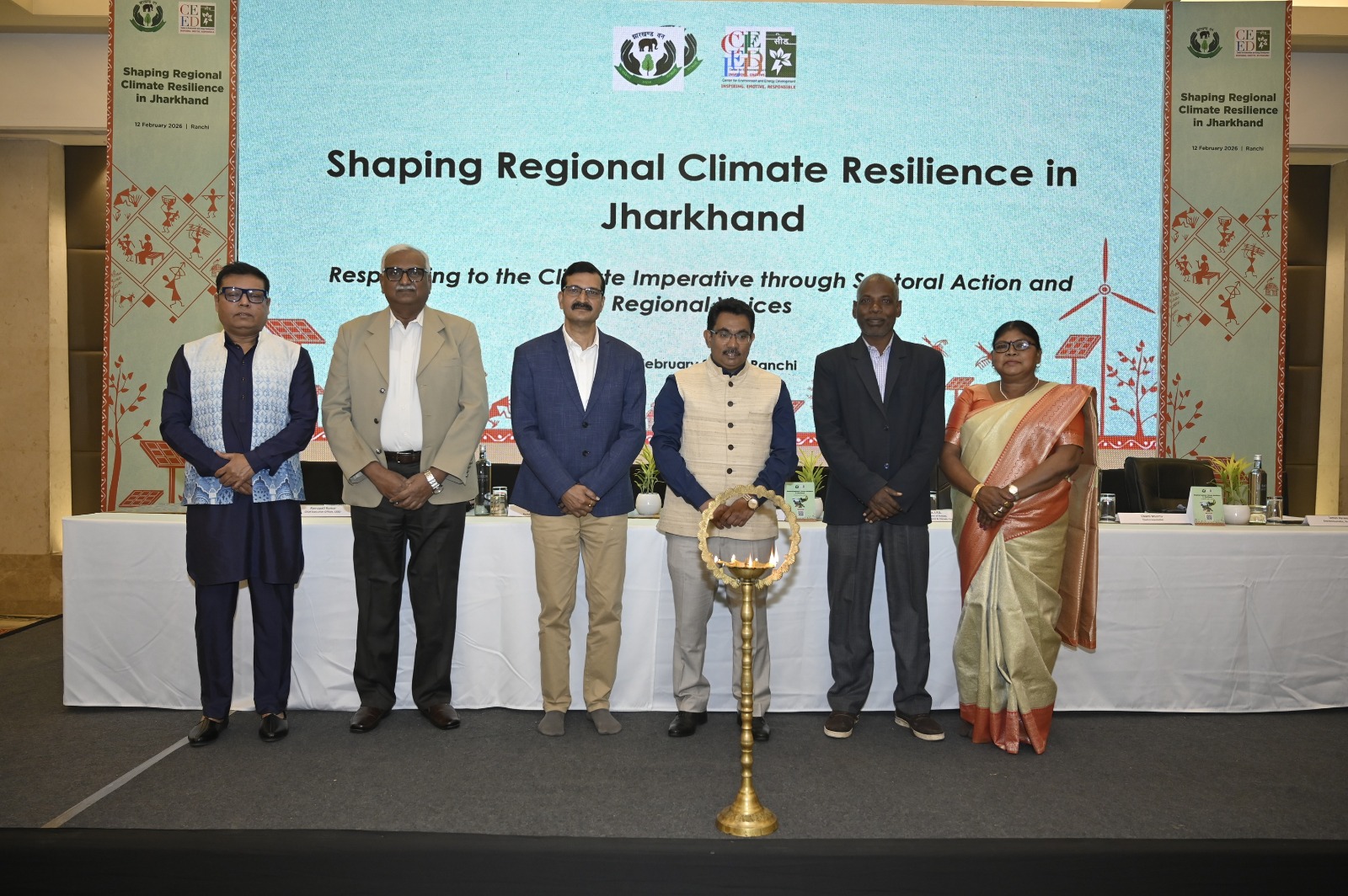
Ranchi: In a landmark move to safeguard one of India’s most climate-vulnerable states, the Department of Forest, Environment, and Climate Change (Government of Jharkhand) and the Center for Environment and Energy Development (CEED) convened a high-level conference to localize climate action through decentralized planning and traditional knowledge.
Forest department secretary Aboobacker Siddique emphasized shifting communities from “beneficiaries” to “decision-makers.” He highlighted that empowering women and tribal collectives is the only way to scale climate success stories.
Principal Chief Conservator of Forest (PCCF) Dr. A.T. Mishra announced that the State Action Plan on Climate Change (SAPCC) is being updated to align with India’s National Commitments (NDCs), focusing on preserving “nature’s commons.”
Cultural & Ecological Synthesis: Padma Shree Chami Murmu reminded the forum that tribal wisdom is not just heritage but a survival strategy. Forest landscapes must be treated as central to social cohesion and livelihood, not peripheral issues.
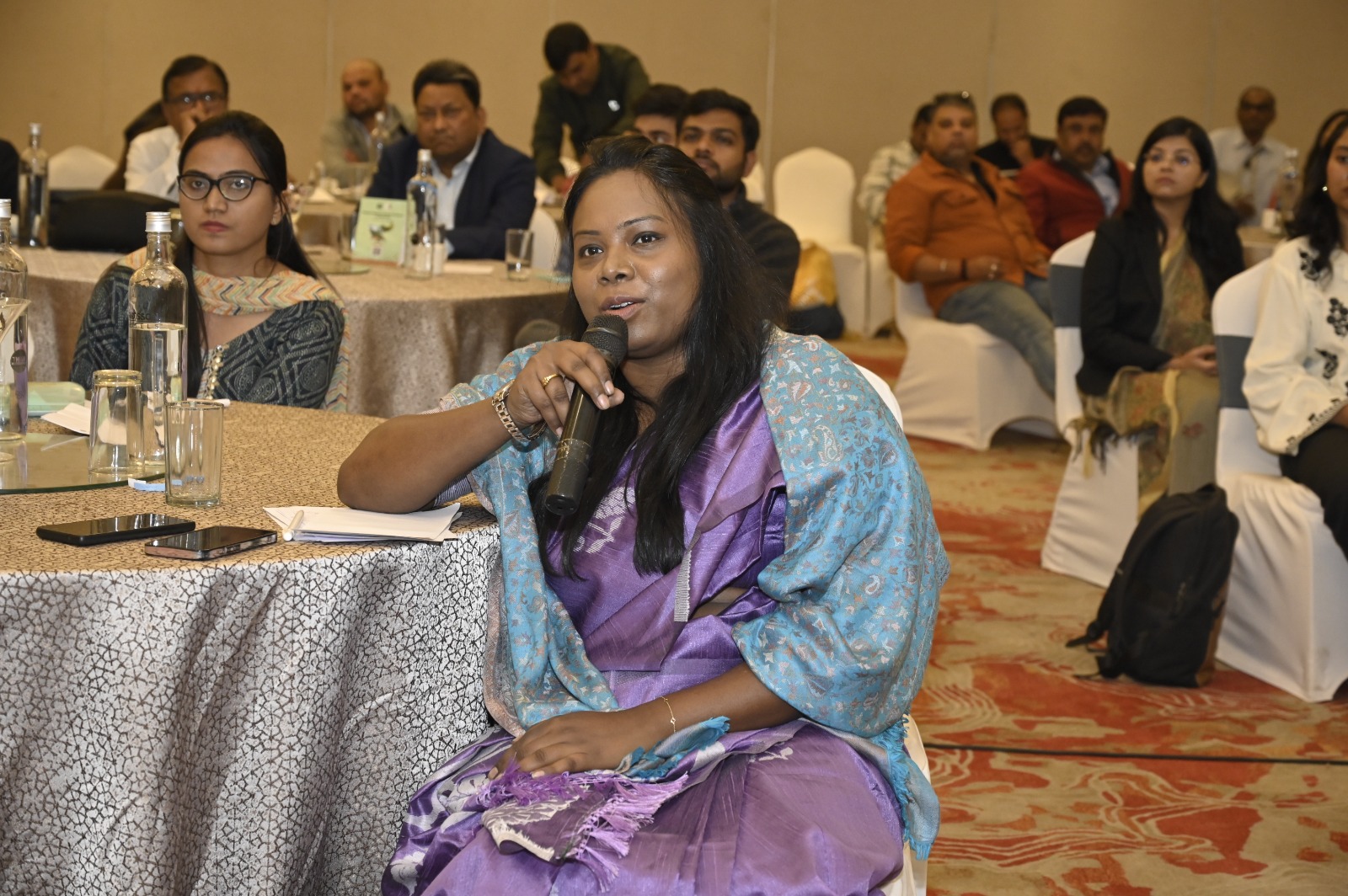
CEED CEO Ramapati Kumar noted that from the forests of Kolhan to the drought-prone lands of Palamu, local innovations are now being supported by data and science to create a “Jharkhand Resilience Model.”
Addressing Extreme Vulnerability
The conference raised an urgent alarm: 10 out of 24 districts in Jharkhand are identified as highly vulnerable. These include Sahibganj, Pakur, Chatra, Garhwa, Palamu, Giridih, Hazaribag, Bokaro, Khunti, and Godda.
Actionable Pathways
Experts from the Ramakrishna Mission Ashram, The Hans Foundation, and XISS discussed moving beyond theory to “Living Infrastructure.” This includes:
Water Conservation: Building climate-resilient structures.
Agro-Livelihoods: Diversifying crops in mining-adjacent regions.
Natural Buffers: Utilizing forests as barriers against climate shocks.
The summit concluded with a unified call to integrate these strategies across all five administrative divisions—Palamu, Santhal Pargana, North & South Chotanagpur, and Kolhan—to ensure no region is left behind in the fight against global warming.
