
“Tribal Issues are National Issues”: RSS Sarsanghchalak Mohan Bhagwat
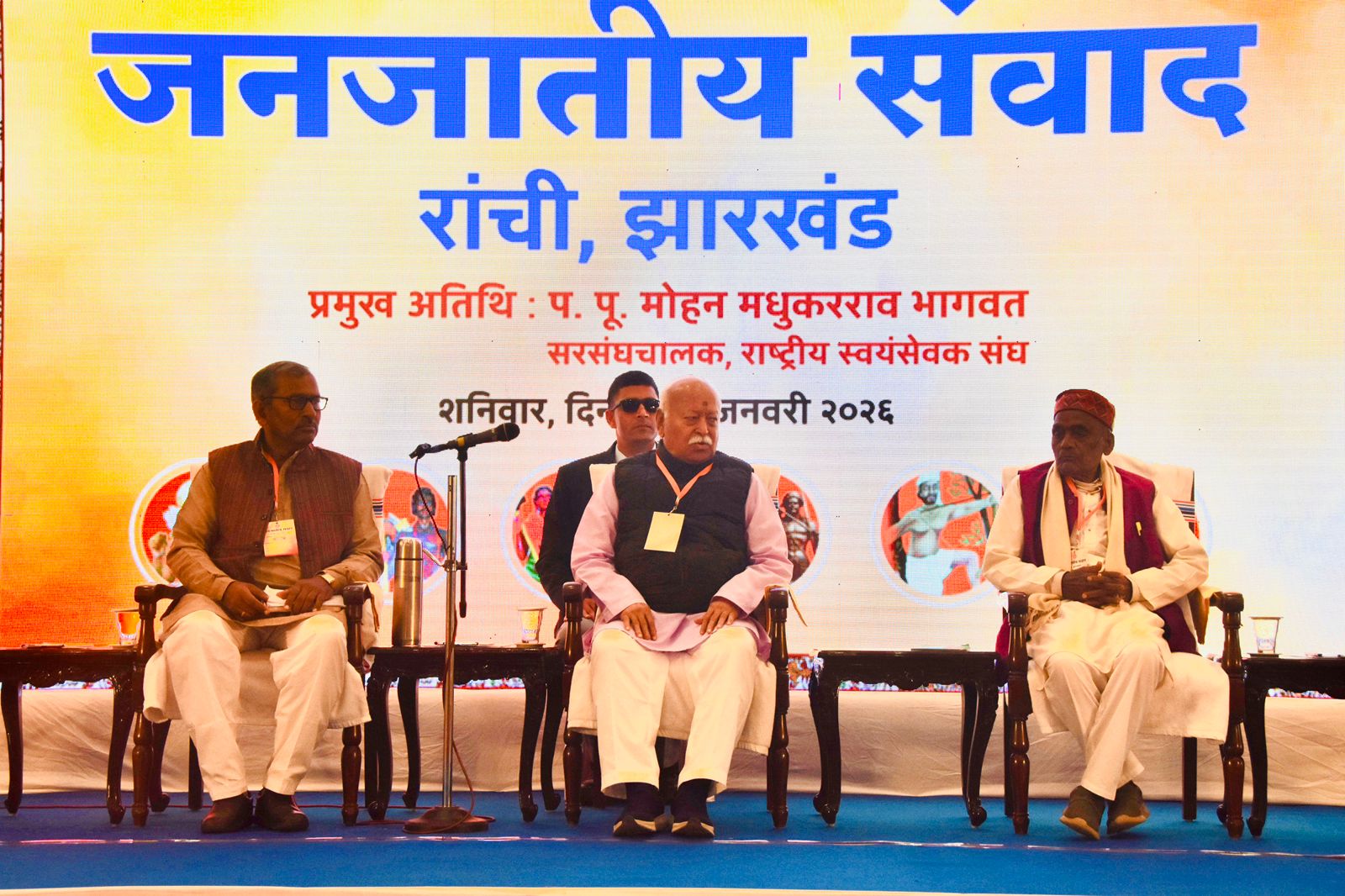
RANCHI: A comprehensive Janjati Samvad Karyakram was held this Saturday at Dibdih, Ranchi, featuring Rashtriya Swayamsevak Sangh (RSS) Sarsanghchalak Mohan Madhukar Bhagwat as the Chief Guest. The dialogue aimed to address the social, cultural, educational, and economic challenges facing the tribal community.
Session I: Grassroots Challenges and Community Concerns
Tribal representatives highlighted several critical issues affecting their communities:
Identity & Conversion: Speakers expressed deep concern over high rates of religious conversion and the erosion of traditional Adivasi cultural identity. One representative shared success in preventing 35 community members from converting, stressing the need for social unity.
Land & Demographics: Concerns were raised regarding illegal land encroachment. Allegations were made that demographic shifts and exploitative marriages are being used to occupy tribal land, often sidelining Adivasi women in political decision-making.
Education & Youth: A student from Ghatsila highlighted high dropout rates in higher education due to inadequate scholarship facilities. Social workers noted that while Vidya Bharti provides affordable education, missionary-led schooling sometimes leads to cultural alienation.
Governance: The weak implementation of the PESA Act and the rise of substance abuse among youth were identified as urgent systemic hurdles.
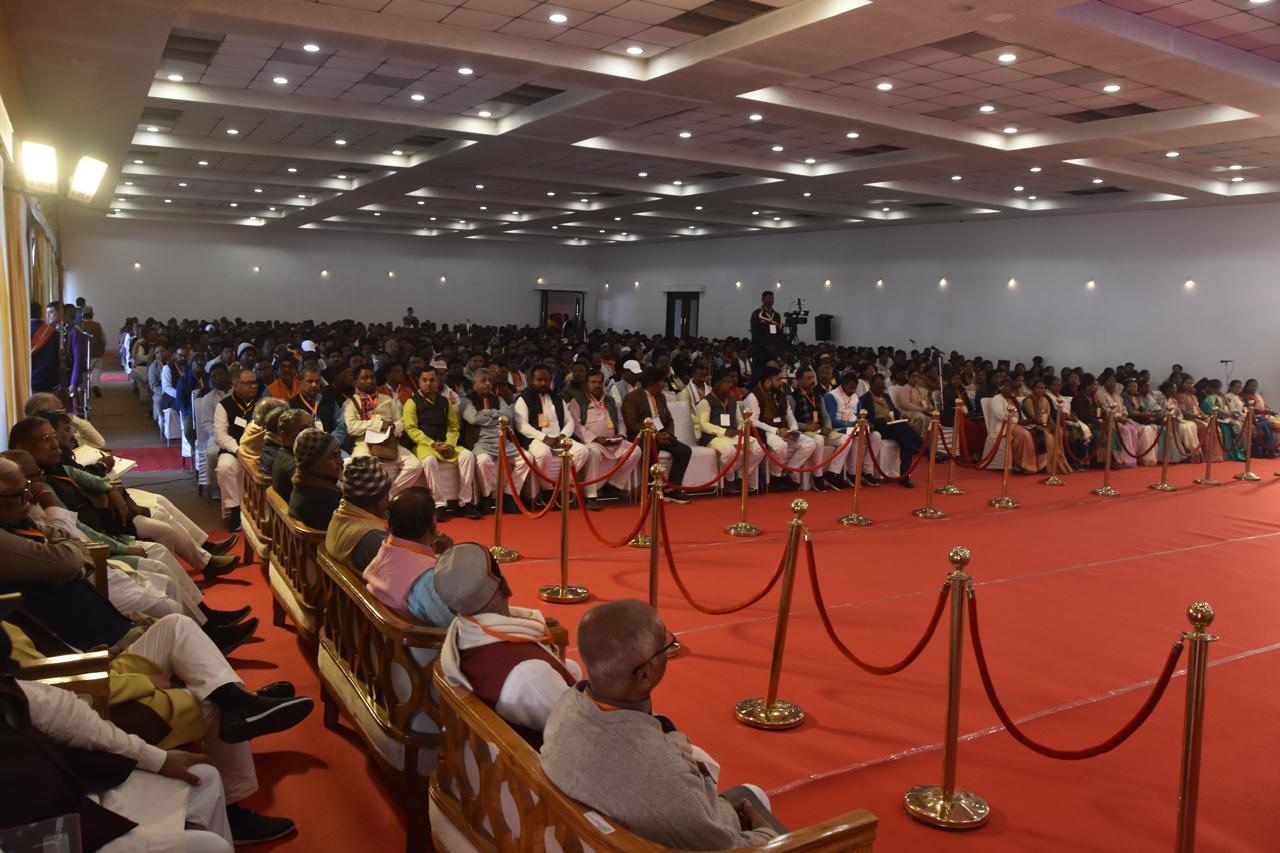
Session II: The Path Forward – Mohan Bhagwat’s Vision
In an interactive session, Bhagwat emphasized that the struggles of the Adivasi society are inseparable from the health of the nation.
Key highlights of his address included:
Unity in Diversity: He stated that India’s civilizational history, spanning nearly two lakh years, is rooted in a shared “Sanatan” identity. He clarified that “Hindu” is not a specific ritualistic system but a way of life deeply connected to Jal, Jungle, and Jameen (water, forest, and land).
Sarna and Hinduism: Bhagwat clarified that Sarna is a revered form of worship within the broader cultural fabric, cautioning that viewing it as a separate religion could lead to fragmentation and exploitation by external forces.
Four Pillars of Progress: He outlined a strategic roadmap for tribal development:
Awakening Self-Respect: Instilling cultural pride.
Self-Reliance: Focus on employment and manual labor.
Protection: Safeguarding land rights and resisting aggression.
Value-Based Education: Ensuring children receive discipline-based learning by age 12.
National Legacy: He asserted that icons like Bhagwan Birsa Munda are national heroes belonging to all Indians, not just one community.
Conclusion:
Bhagwat assured attendees that their concerns would be communicated to the Prime Minister. He concluded with a call to action, stating that the uprooting of Adivasi society would weaken the nation’s foundation. He urged the community to transition from “discussion to duty” through patience, coordination, and collective determination.
